When it comes to conducting inspections, repairs, and maintenance on overhead structures, working at height is often unavoidable. Whether inspecting roof structures, overhead cranes, gantry systems, or building infrastructure, safe and reliable access equipment is critical. One of the most effective solutions for these tasks is the use of cherry pickers, also known as mobile elevated work platforms.

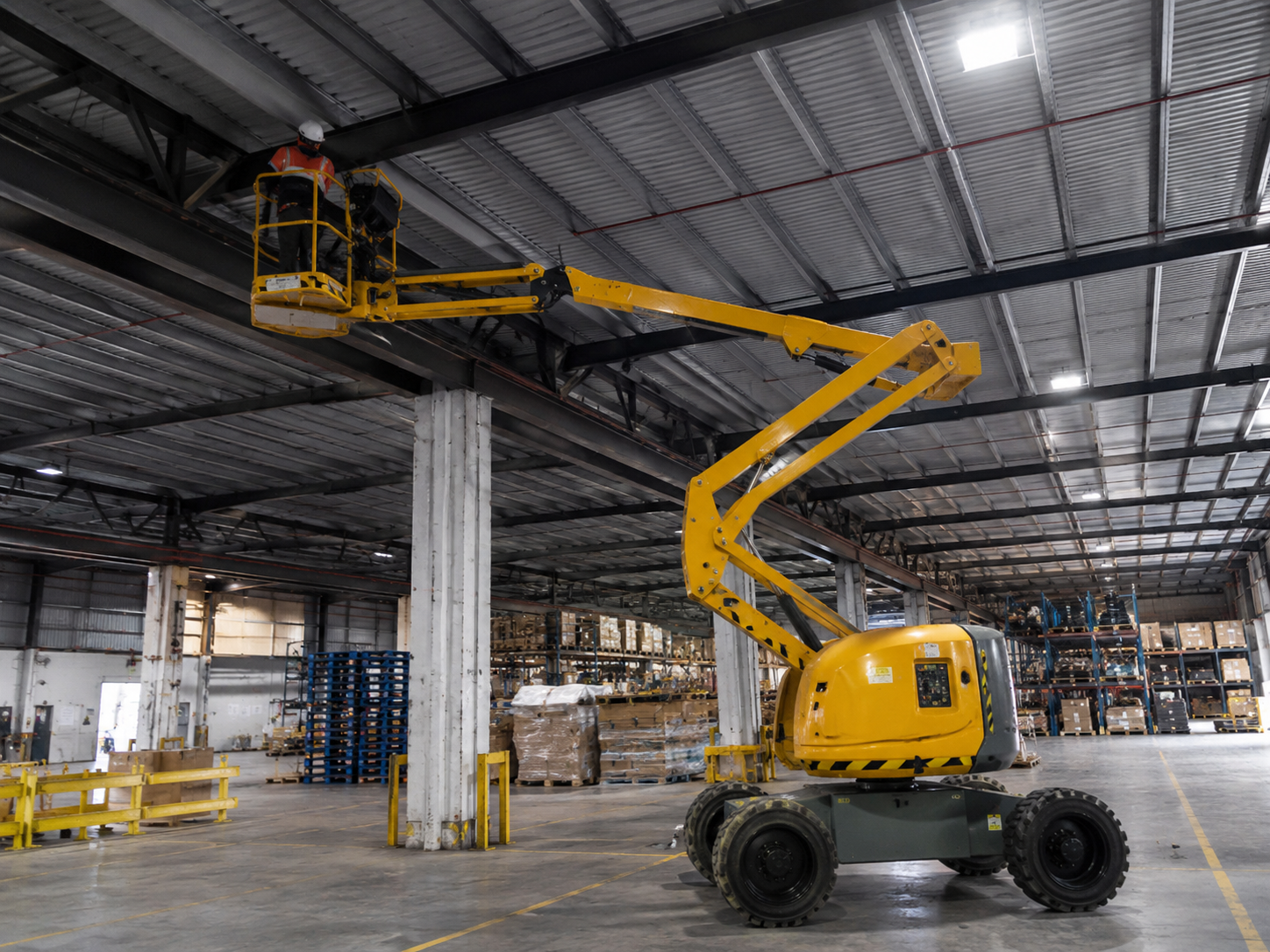
At AACranes, we regularly utilize cherry pickers to provide safe access for technicians performing inspections, preventative maintenance, repairs, and load testing activities. The image above shows one of our technicians using a cherry picker to access elevated steelwork safely inside a bulk storage facility.
Unlike ladders or makeshift access methods, cherry pickers provide a stable and secure working platform. This significantly reduces the risk of falls while allowing technicians to maintain three points of contact and work comfortably at height.
Many industrial facilities contain structures that are difficult to access safely from the ground. Cherry pickers allow technicians to reach high-level components such as:
Cherry pickers can be positioned quickly and adjusted as required, reducing downtime and allowing inspections and repairs to be completed more efficiently than traditional access methods.
Using the correct access equipment helps prevent accidental damage to buildings, crane structures, and other assets that can occur when unsuitable access methods are used.

Our team uses specialised cherry pickers to safely access elevated steel beams, roof structures, and overhead installations for comprehensive inspections, maintenance, and repair work.
Safety is always the highest priority when working at height. Before any work begins, a thorough risk assessment should be conducted to identify potential hazards and ensure appropriate control measures are in place.
Only trained and authorised personnel should operate cherry pickers. Operators must understand the machine’s controls, limitations, and emergency procedures.
A comprehensive pre-use inspection should be completed before each deployment, including checks of:
Where required by regulations or site-specific requirements, operators should wear appropriate fall arrest equipment and ensure lanyards are correctly attached to designated anchor points.
The working surface must be assessed to ensure it can safely support the weight of the machine. Stabiliser legs should be fully deployed and positioned on firm ground to prevent movement during operation.
Potential hazards such as overhead obstructions, power lines, confined spaces, wind conditions, and nearby plant operations must be identified and controlled before work begins.
Effective communication between operators, technicians, and site personnel helps ensure work is completed safely and efficiently, particularly when working in busy industrial environments.
