
Correct Sling Storage
A Simple Step That Extends Sling Lifespan and Improves Safety
Lifting slings are among the most important components used in material handling and lifting operations. Whether manufactured from wire rope, chain, or synthetic materials, slings are subjected to significant loads and harsh working conditions.
While regular inspections and proper usage are essential, correct storage is often overlooked despite playing a major role in preserving sling lifespan and maintaining workplace safety.
Why Proper Sling Storage Matters
When slings are left on workshop floors, exposed to weather conditions, or stored incorrectly, they can deteriorate long before reaching their expected service life.
Moisture, sunlight, chemicals, dirt, and physical damage can all weaken sling materials, increasing the risk of failure during lifting operations.
Proper storage helps to:
- Extend the working life of slings
- Reduce replacement costs
- Maintain sling integrity and load capacity
- Improve workplace organization
- Minimize safety risks during lifting operations
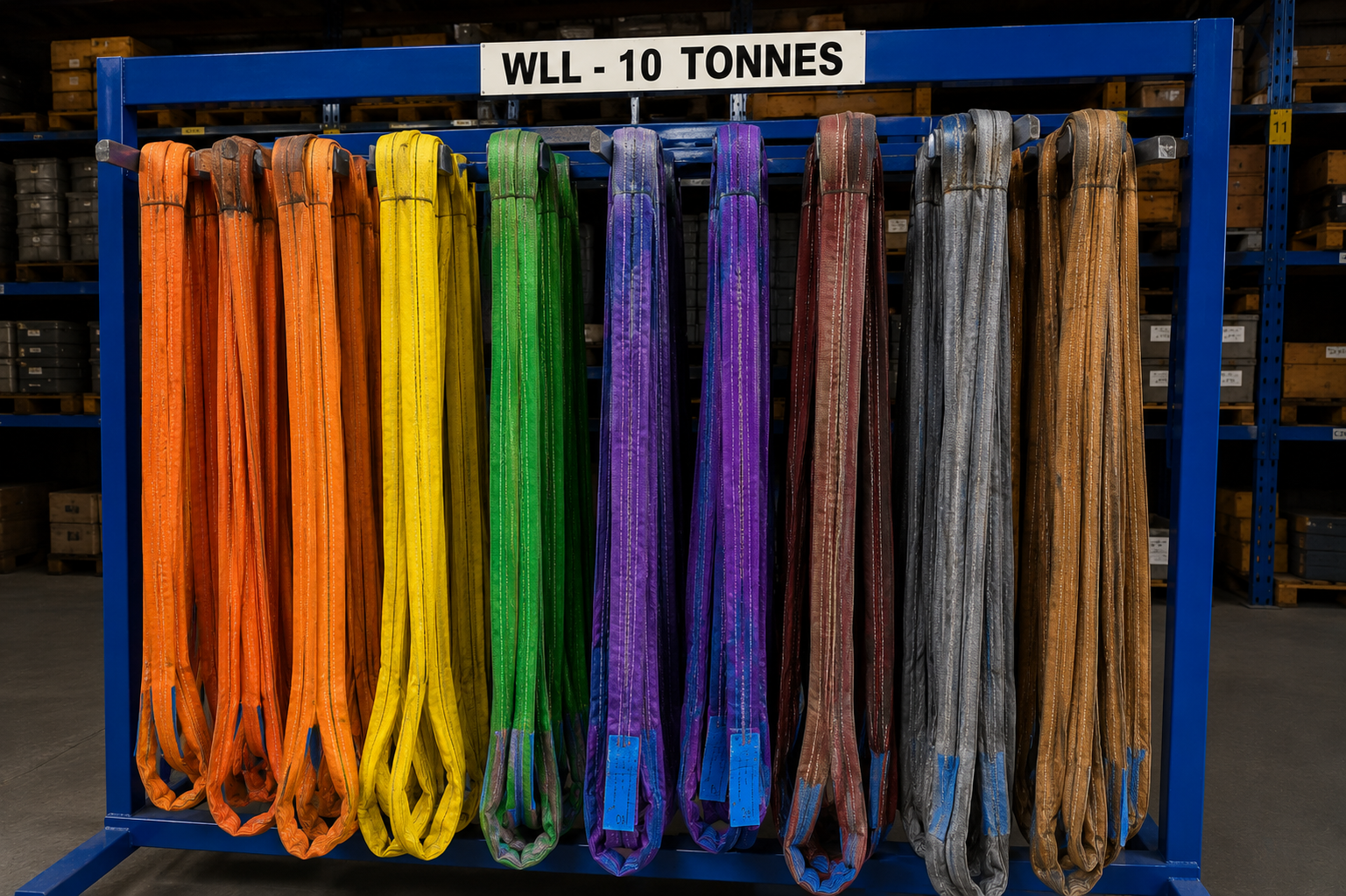
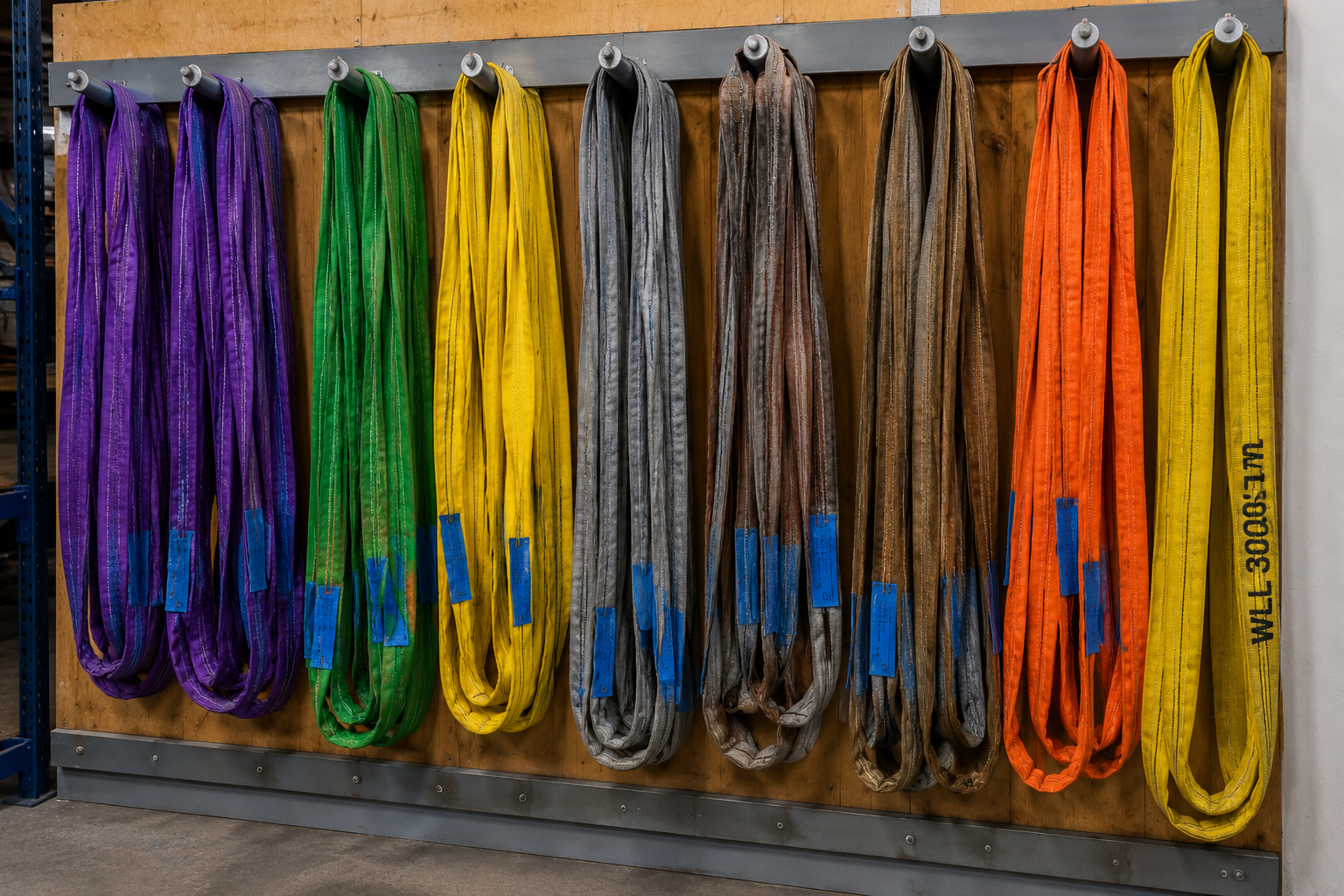
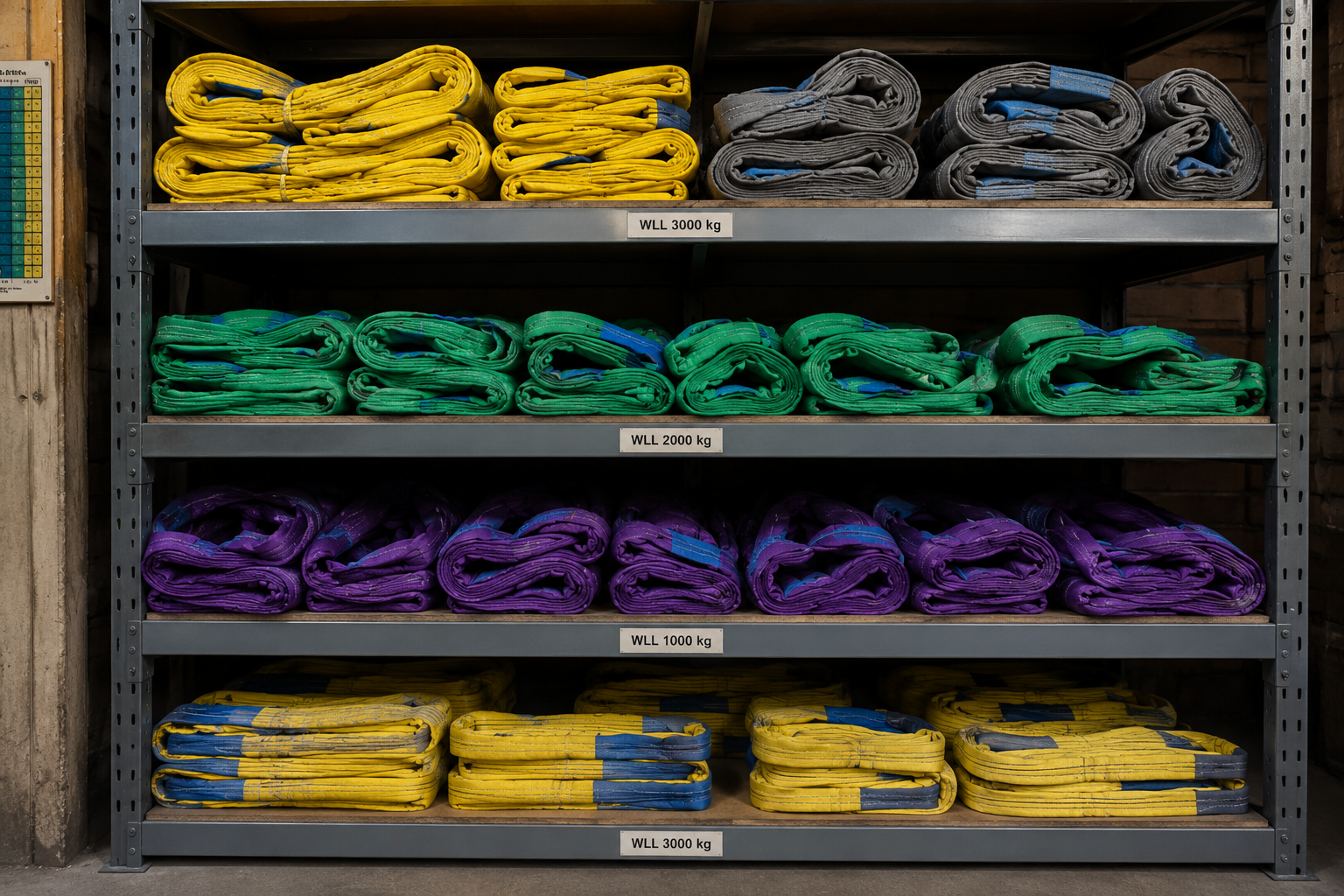
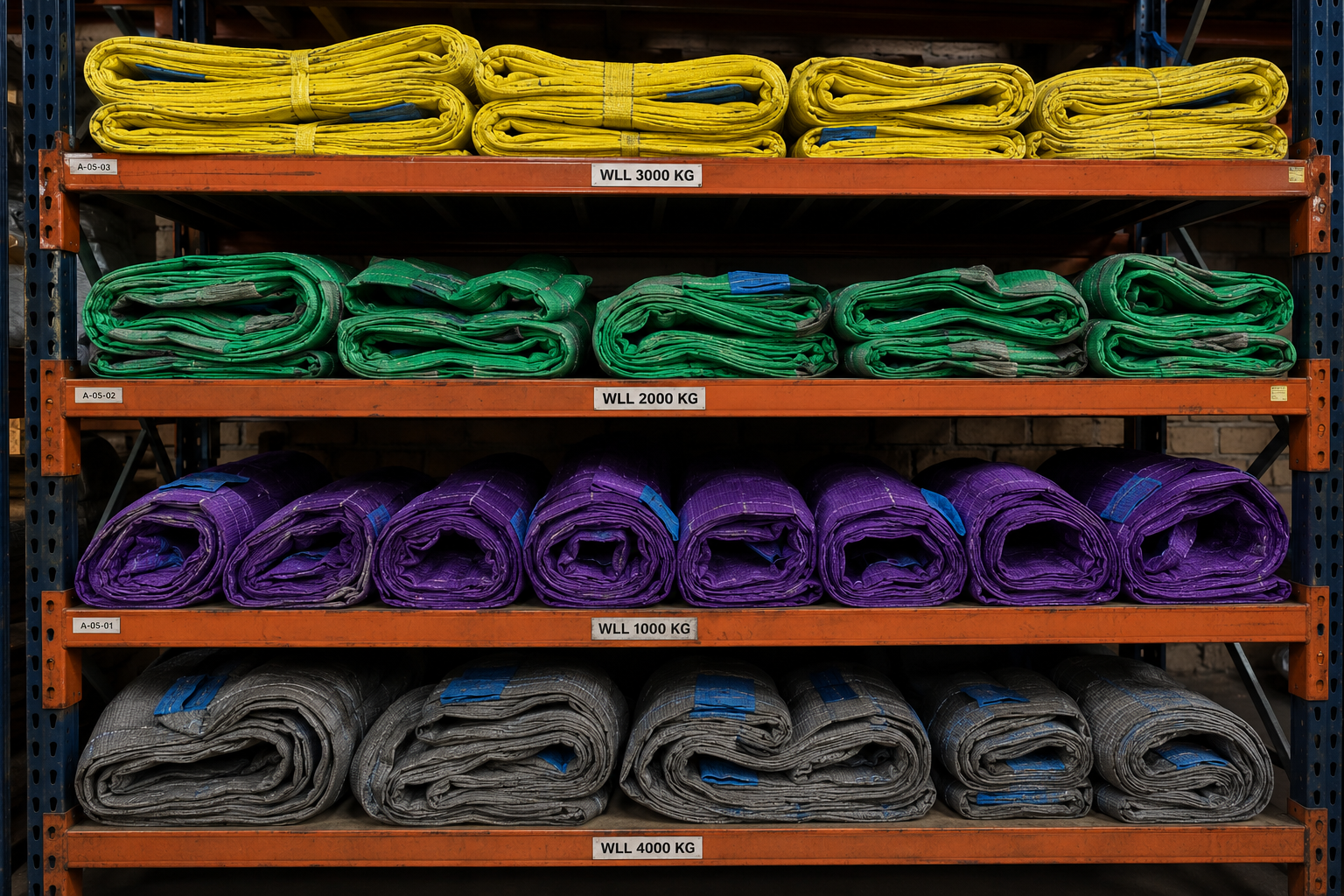
General Sling Storage Best Practices:
Store Slings in a Clean, Dry Area
Slings should always be stored in a designated area that is protected from rain, moisture, and excessive humidity. Damp conditions can lead to corrosion on chain and wire rope slings, while synthetic slings may develop mould or material degradation.
Keep Slings Off the Ground
Avoid leaving slings on workshop floors where they can become contaminated with dirt, oil, chemicals, or be damaged by vehicles and equipment. Use dedicated storage racks, hooks, or cabinets to keep slings elevated and organized.
Protect from Direct Sunlight
Synthetic webbing and round slings are particularly vulnerable to prolonged ultraviolet (UV) exposure. Continuous sunlight can weaken fibres and reduce the sling’s strength over time. Store synthetic slings indoors or in shaded storage areas whenever possible.
Separate Different Sling Types
Store chain slings, wire rope slings, and synthetic slings separately to prevent unnecessary damage. Sharp edges on chain or wire rope slings can easily cut or abrade synthetic sling materials if stored together.
Avoid Chemical Exposure
Keep slings away from acids, alkalis, solvents, paints, and other corrosive substances. Even indirect exposure can weaken sling materials and compromise their safe working load.
Storage Recommendations by Sling Type:
Synthetic Webbing and Round Slings
- Store away from direct sunlight.
- Keep clear of sharp edges and rough surfaces.
- Ensure slings are clean and dry before storage.
- Hang neatly to prevent kinks and twisting.
Wire Rope Slings
- Store on racks or hooks to prevent kinking.
- Keep lubricated according to manufacturer recommendations.
- Protect from excessive moisture to minimize corrosion.
- Avoid tight bends during storage.
Chain Slings
- Hang individually to prevent tangling.
- Inspect for corrosion before returning to service.
- Keep away from corrosive chemicals.
- Store in dry conditions to reduce rust formation.
Inspection Before Storage
Before placing any sling into storage, conduct a visual inspection for:
- Cuts, tears, or abrasions
- Broken wires
- Bent or damaged fittings
- Corrosion or rust
- Heat damage
- Missing identification tags
Any sling showing signs of damage should be removed from service immediately and assessed by a competent person.
Remember: A well-maintained sling starts with proper storage. Taking a few extra minutes to store slings correctly today can prevent costly failures and safety incidents tomorrow.