
The Lift That Almost Went Wrong
The crane looked fine. The hoist sounded fine. The operator had used it hundreds of times before. So what could possibly go wrong?
In busy industrial and engineering environments, lifting equipment is often used every day. Because equipment becomes familiar, it can be easy to assume that everything is working as it should. But some problems aren’t immediately visible.
A worn component, a mechanical issue or deterioration that isn’t obvious during a basic visual inspection could become a serious concern once equipment is placed under load – That’s where proper inspection and load testing play an important role.
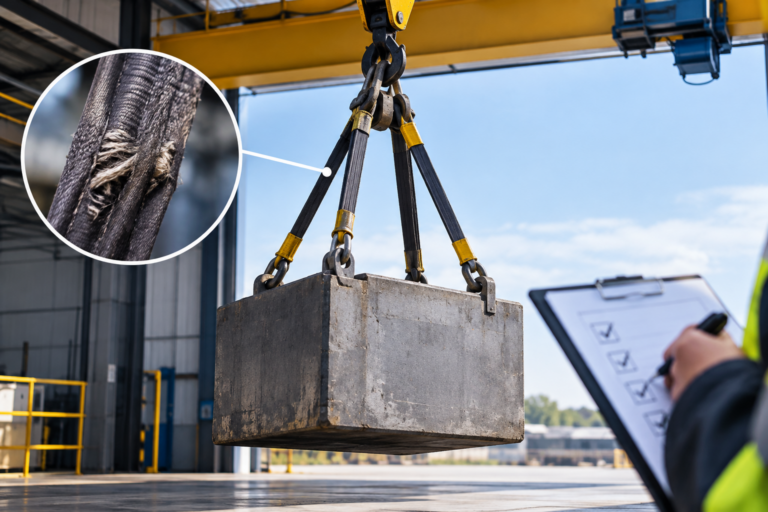
A Routine Lift Takes an Unexpected Turn
Imagine a busy engineering workshop on a Monday morning. The team needs to move a 2.5-ton piece of machinery from one area of the workshop to a maintenance platform. The overhead crane has performed similar lifts countless times before. Before starting, the operator performs a basic pre-use inspection.
- The controls respond.
- The hook looks fine.
- The lifting equipment appears to be in good condition.
- Nothing immediately raises concern.
- The load is attached and the lift begins.
As the machinery starts to rise, however, the hoist doesn’t behave as expected. The lifting movement becomes noticeably slower and the operator stops the lift.
The load is safely lowered and the equipment is taken out of service for further inspection.
At first glance, everything had appeared normal, BUT under closer inspection, a component showed signs of wear that weren’t obvious during the initial visual check.
The important question is:
What could have happened if the operator had continued the lift? That’s exactly why relying on appearance alone isn’t enough when it comes to lifting equipment.
Why “It Looks Fine” Isn’t Always Enough
Lifting equipment operates under significant forces and loads. Components can experience wear over time, particularly when equipment is used frequently or operates in demanding environments.
A visual inspection is an important part of safe equipment operation, but it doesn’t necessarily tell you everything about how equipment will perform under its rated working conditions. Load testing provides an additional level of verification by placing equipment under a controlled load to assess its performance and condition. This can help identify potential issues before they become more serious problems.
Load testing shouldn’t be viewed as a replacement for daily inspections or proper maintenance. Instead, think of lifting equipment safety as a combination of several layers.